
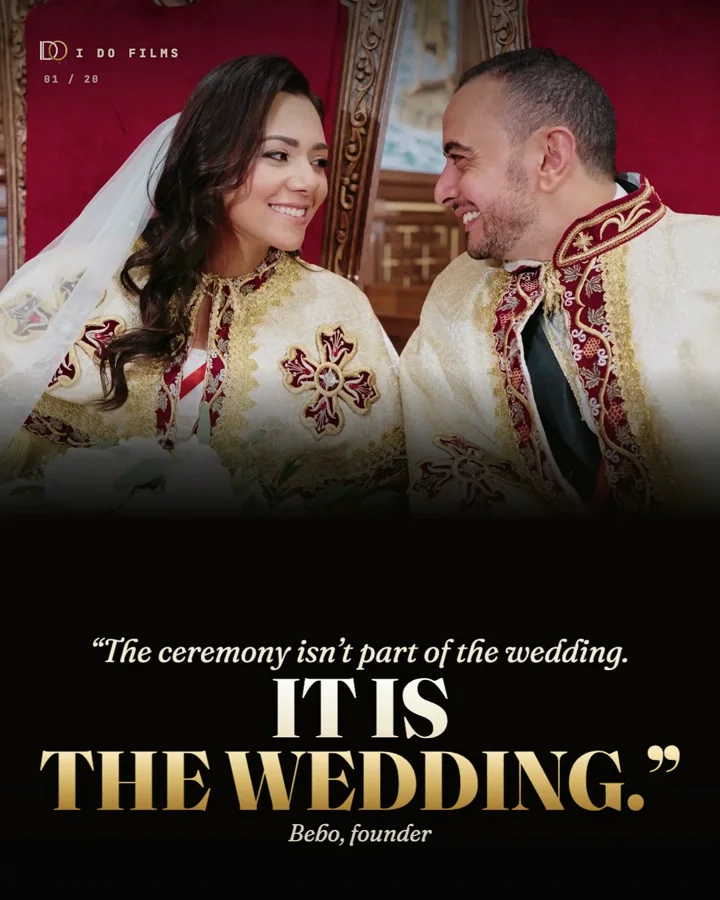
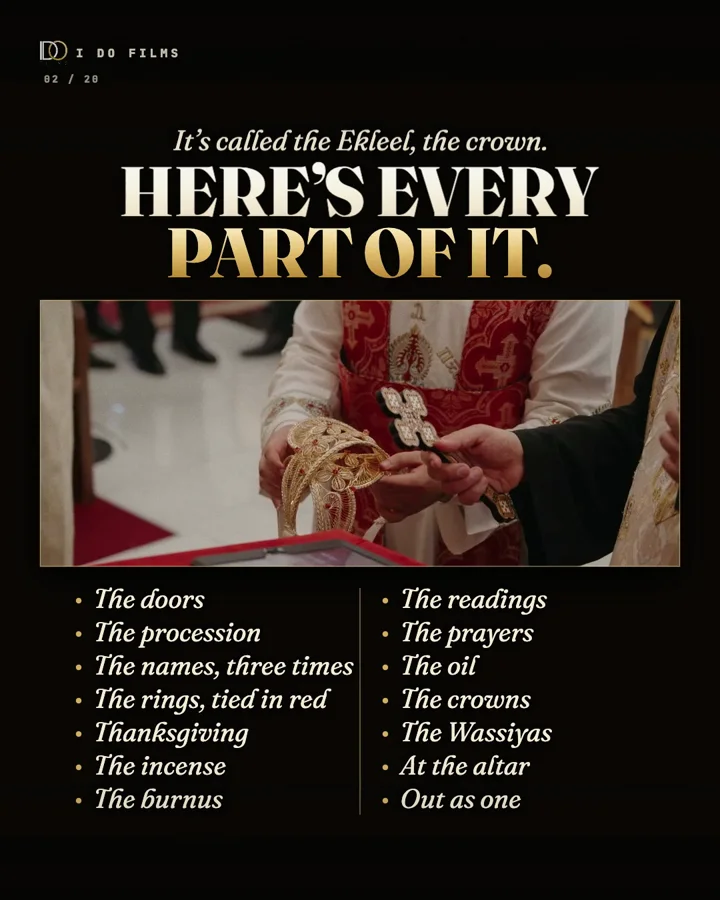
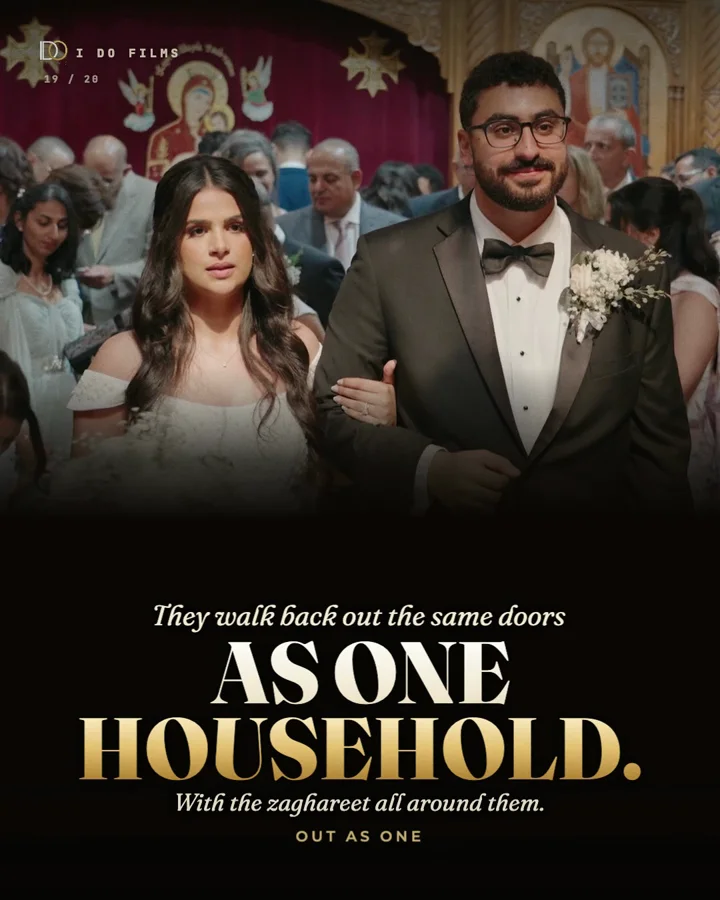
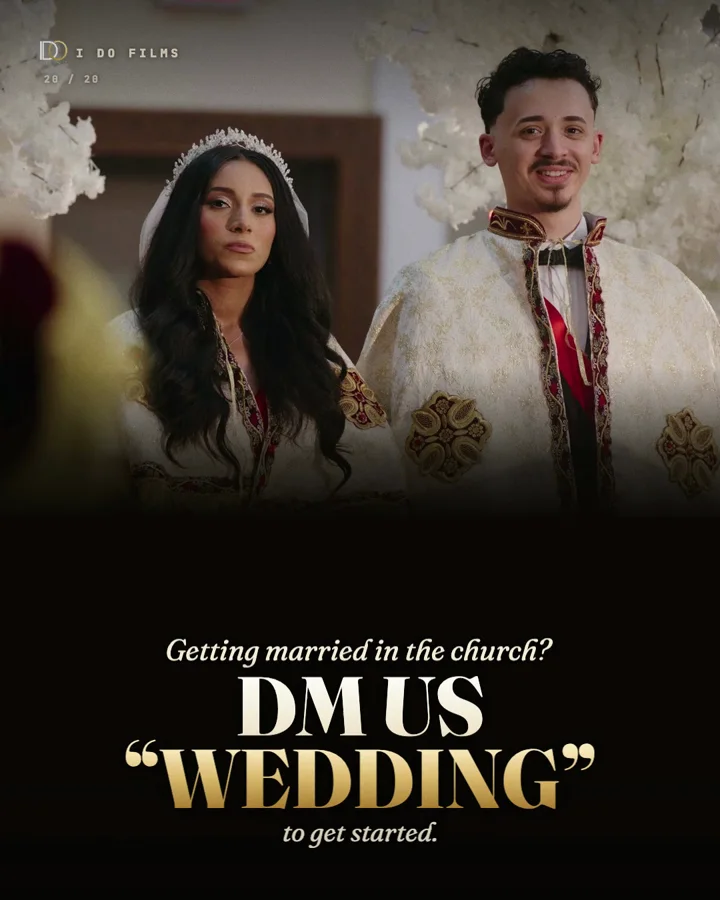

A Coptic Orthodox wedding is the crowning rite, the Ekleel, and it follows a set order: the doorway, the proclamation, thanksgiving and incense, the pledge and rings, the readings, the prayers, the anointing, the crowning, the three Wassiyas, the final blessing and leaving church together. Below is each part, with what we plan so it’s all in your film.
Most of the couples I film come to us through the Coptic community, and I grew up in the liturgy myself. The rite is the same from church to church, but every parish has its own rhythm, and some ceremonies run long. One couple I filmed had a groom who grew up as a priest’s son, and their crowning ran an hour and forty minutes. When the Divine Liturgy is part of the day, the full ceremony can run past two and a half hours.
The rite, part by part
1. The doorway handoff
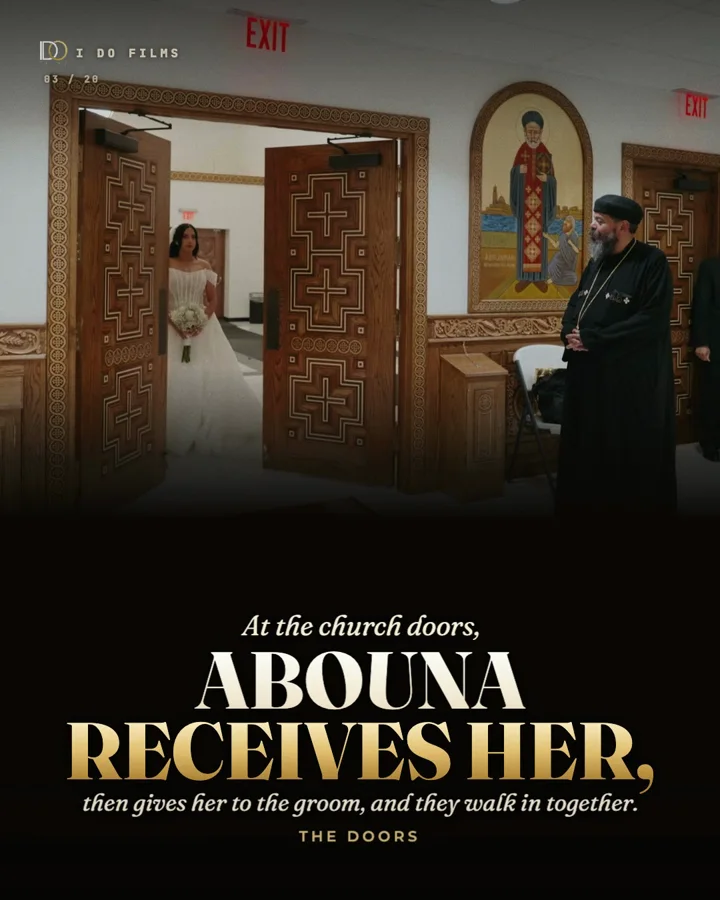
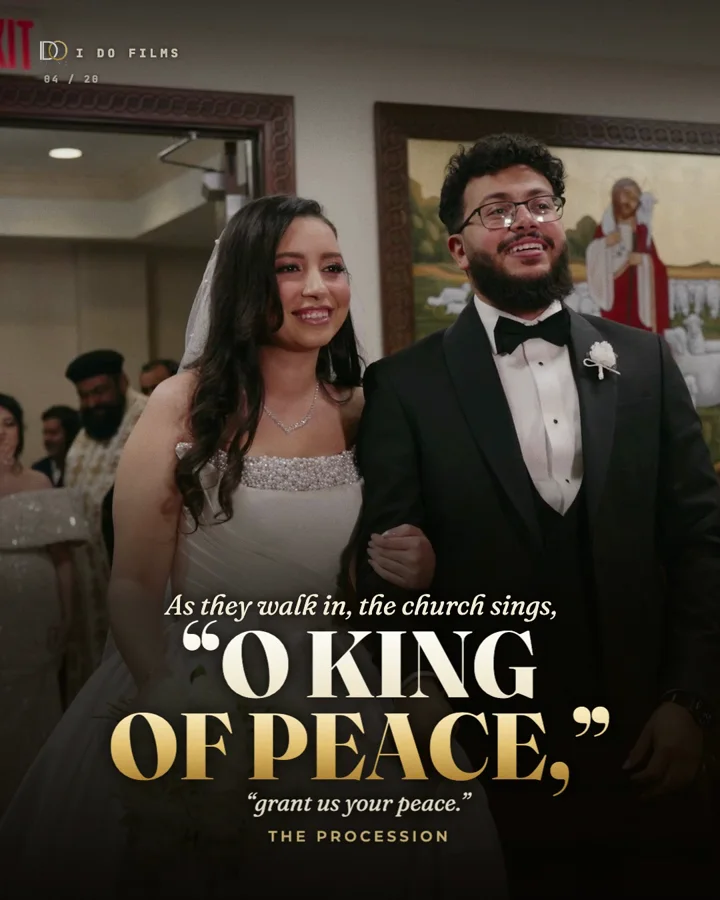
The father, the priest, the groom, then your first steps into church together. We plan around your parish’s doorway practice and film the faces around you as well as the procession.
2. The marriage is proclaimed
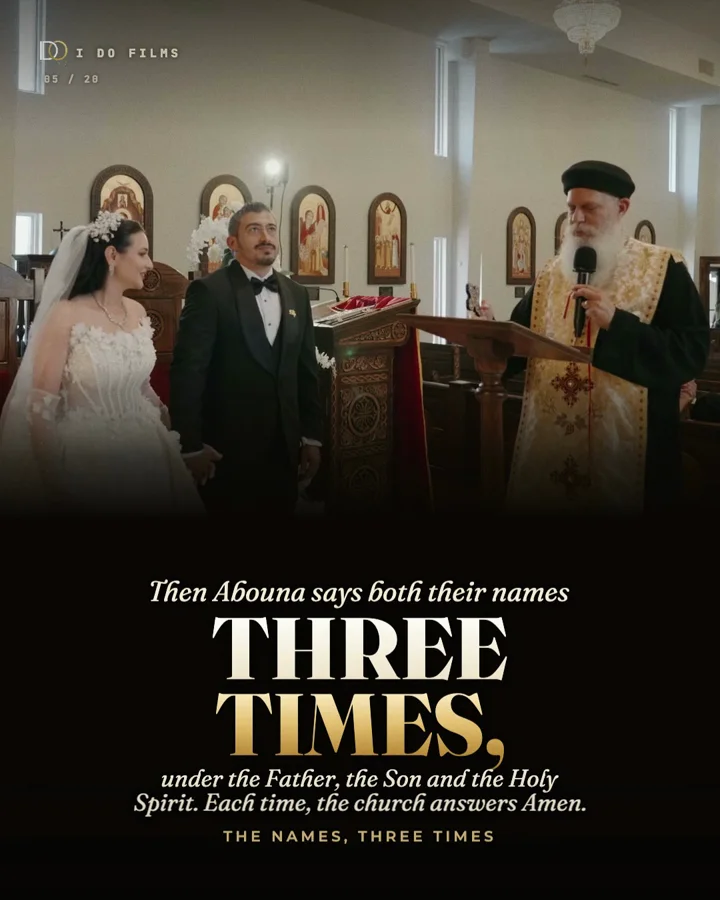
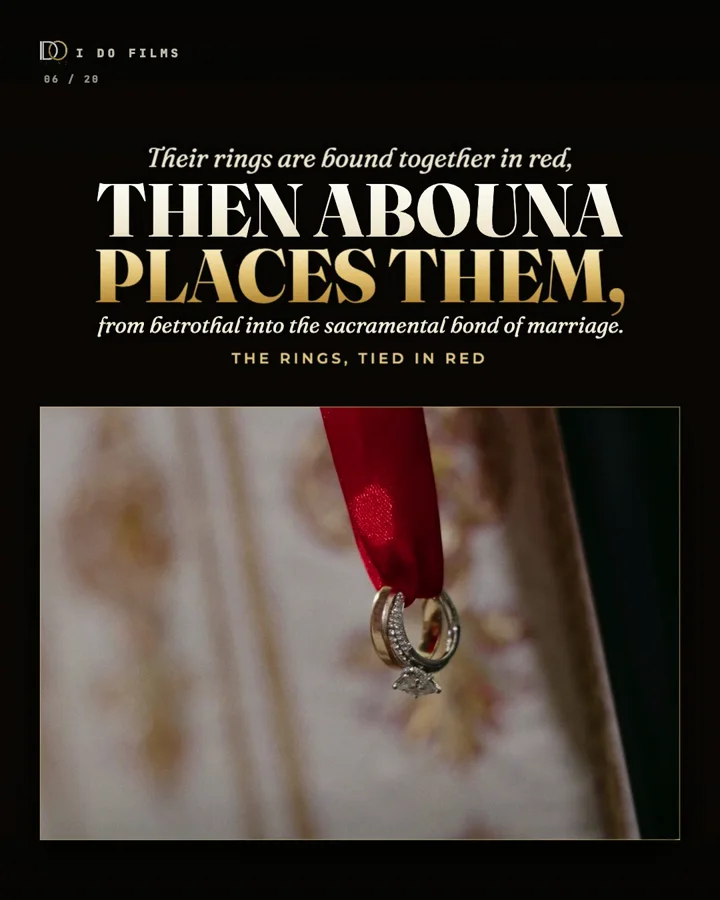
Your names are spoken in three declarations, in the name of the Father, Son and Holy Spirit. The rings are held together in red linen, with Amen and the Lord’s Prayer answering each declaration.
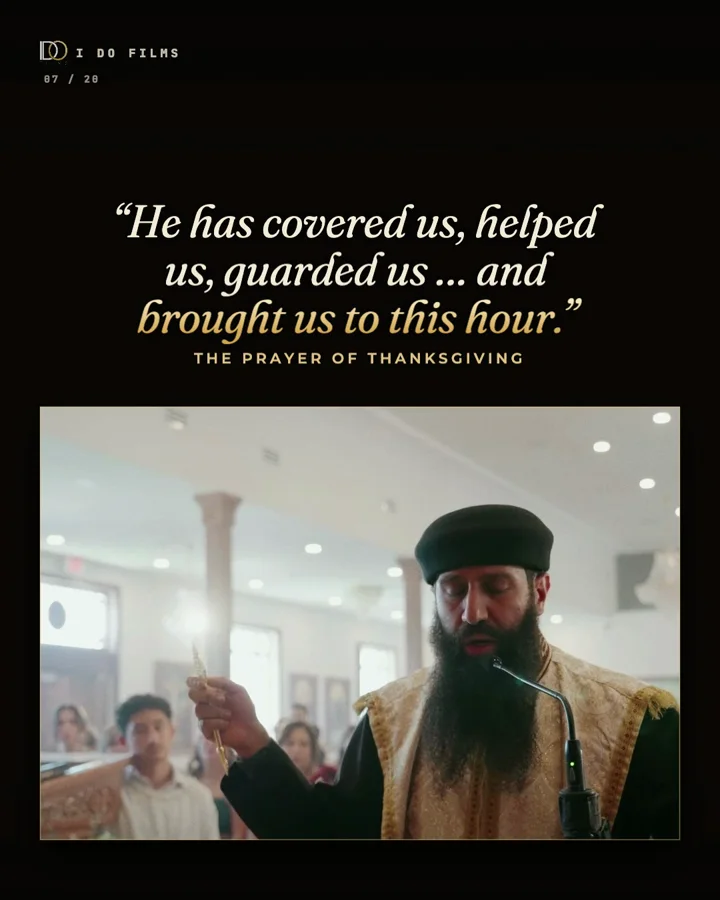
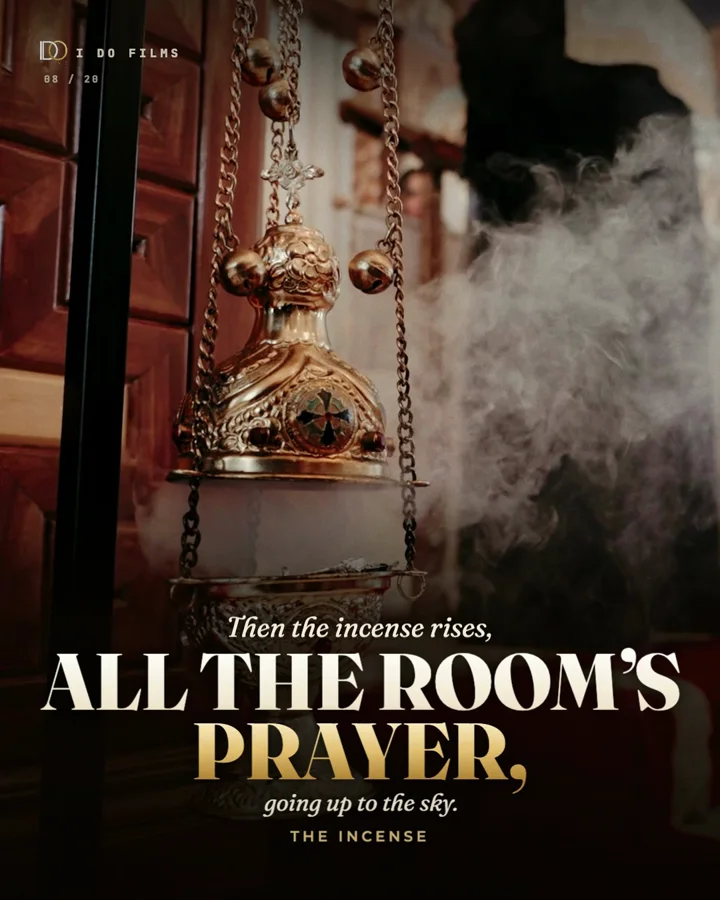
3. Thanksgiving and incense
The Thanksgiving Prayer, rising incense, hymns and responses. For this part I ask for your priest’s contact, or better, the person who runs the church’s audio mixer. Recording from the church’s own sound system keeps the hymns clean. Otherwise a church is echoey, and you hear the moving parts more than the hymns.
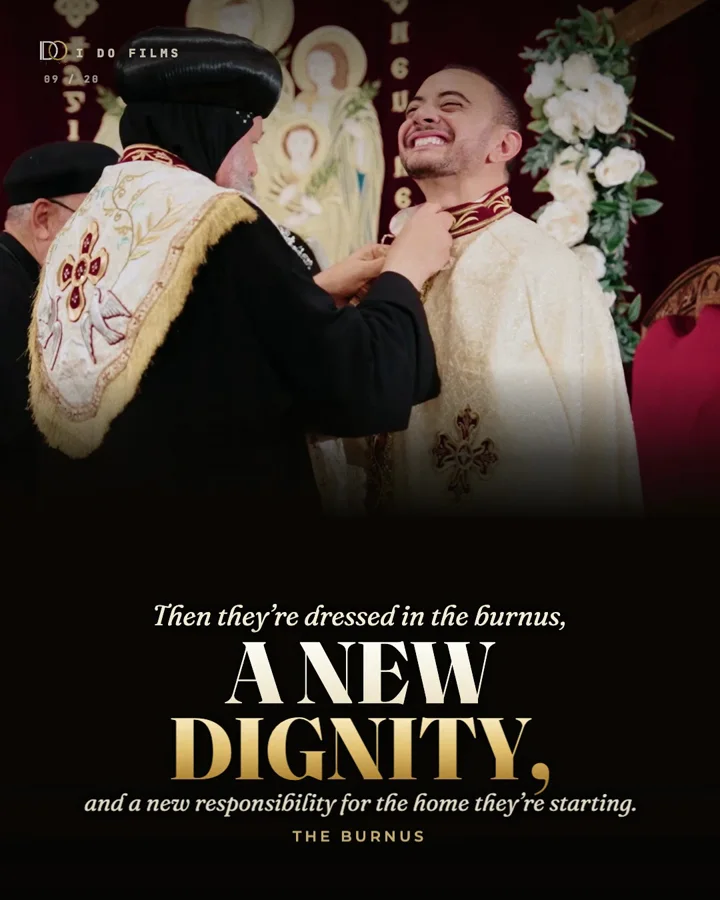
4. Pledge, vestment and rings
The prayers ask for your union in love and peace. The burnus, the groom’s blessed ceremonial garment, and the rings are part of this movement, before the readings, not after the crowns.
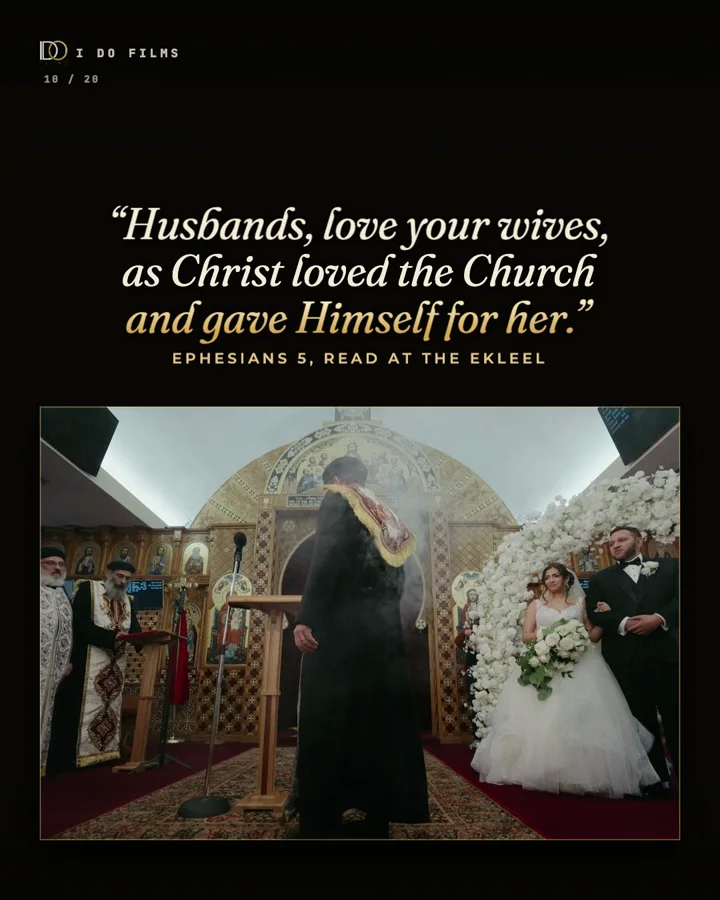
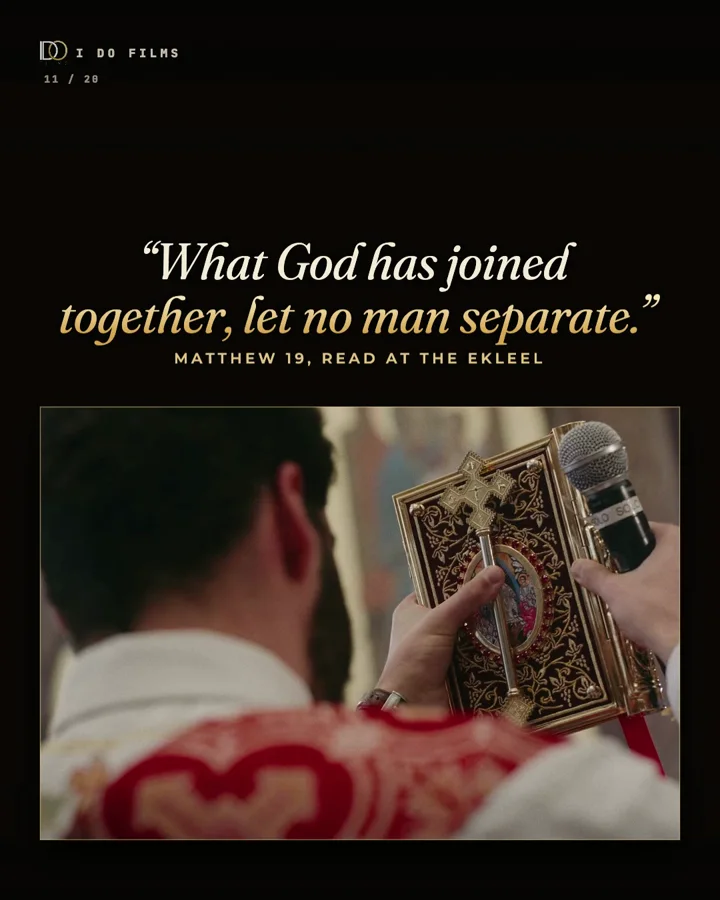
5. The readings
St. Paul’s words about sacrificial love, the hymns around the readings, and the Gospel of becoming one. In the edit we keep complete thoughts, so the meaning stays intact.
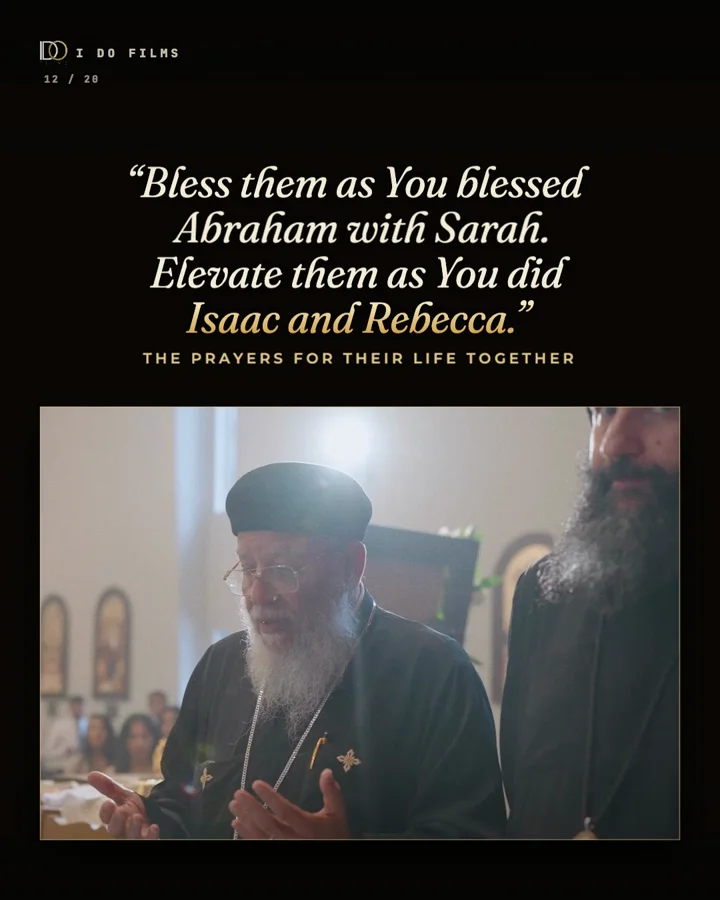
6. The matrimonial prayers
Supplications, litanies, the Creed and the prayers for your marriage. Your families listen as the Church prays for the home you are beginning.
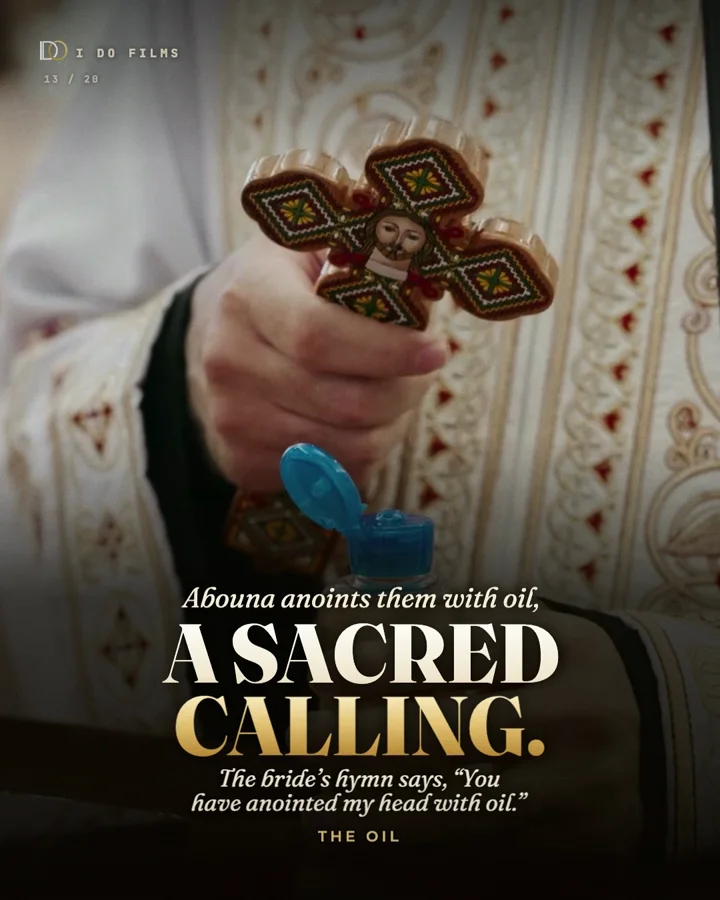
7. The anointing
The oil is blessed, then the groom and bride are anointed. We follow the prayers, responses and actions as they happen.
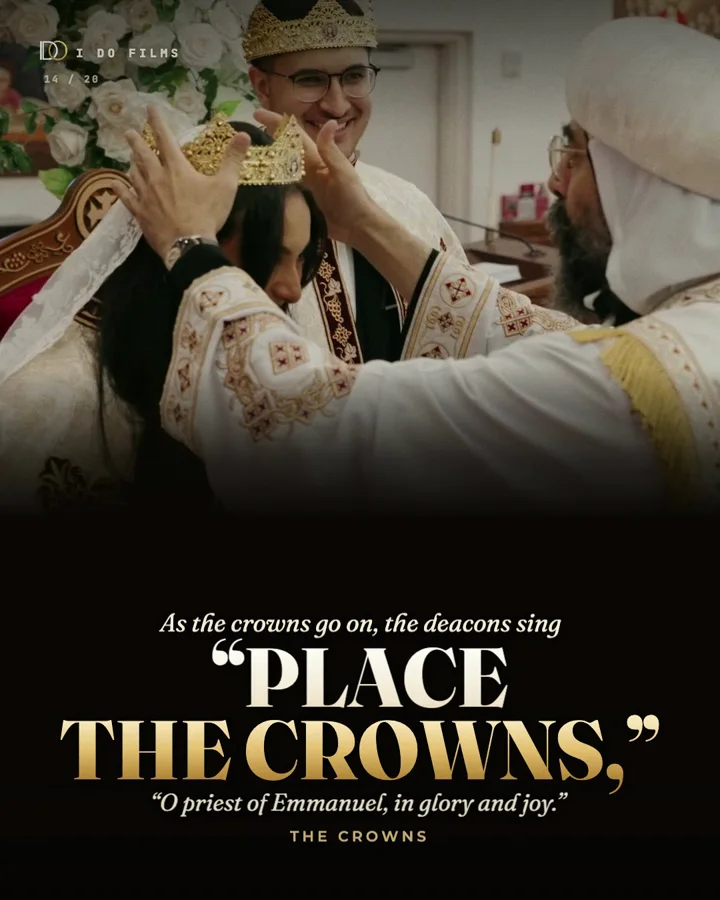
8. The crowning
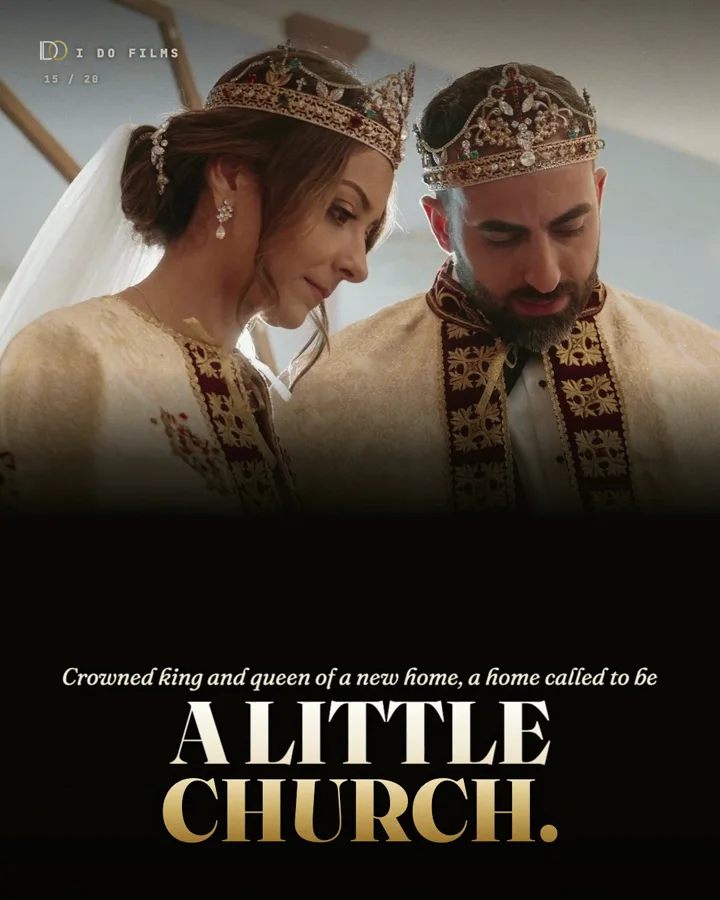
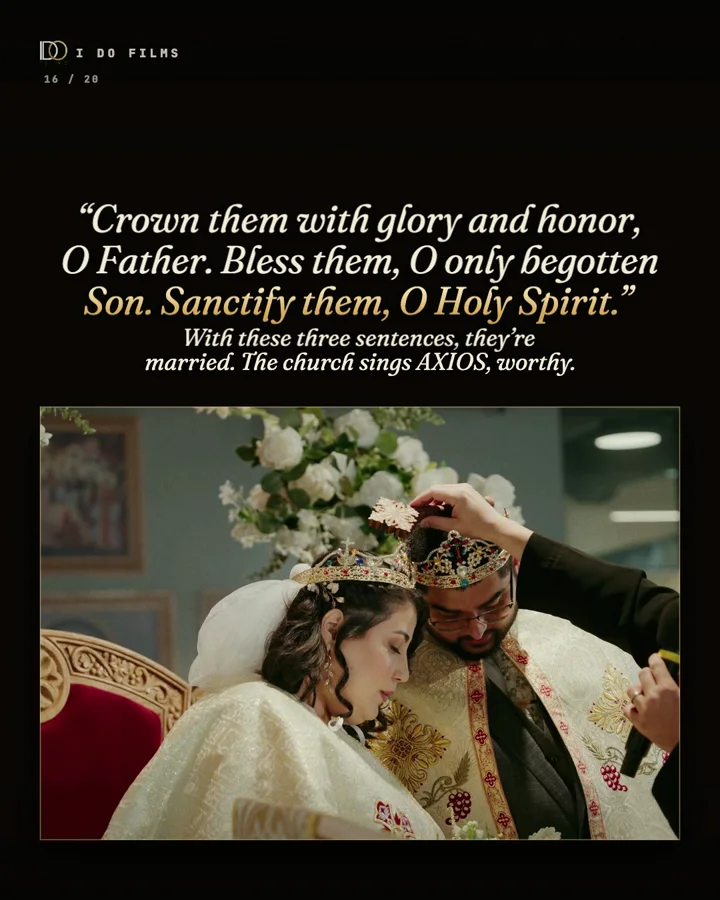
The crowns are blessed and placed to Han-eklom, followed by the joined-heads blessing and AXIOS. The hands placing the crowns, your faces and your parents’ reactions all matter, so we cover all three.
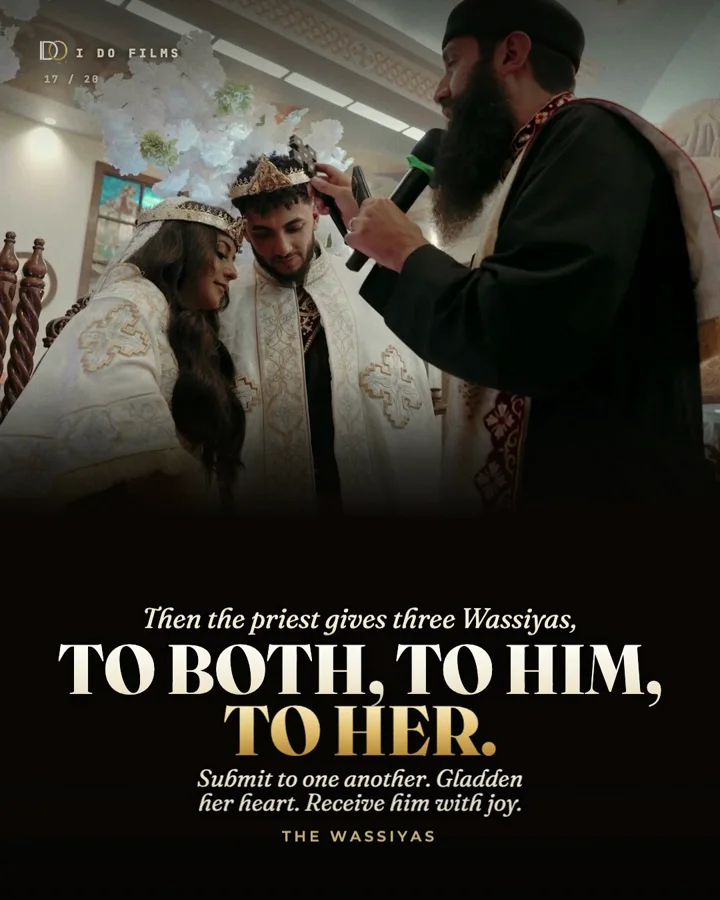
9. The three Wassiyas
The priest addresses you together, then the groom, then the bride. These are pastoral charges about your life together, not personal vows. One groom told me the moment he cared about most was the priest speaking to him as the husband, about his responsibility. We make sure every word of it can be heard.
10. The final blessing
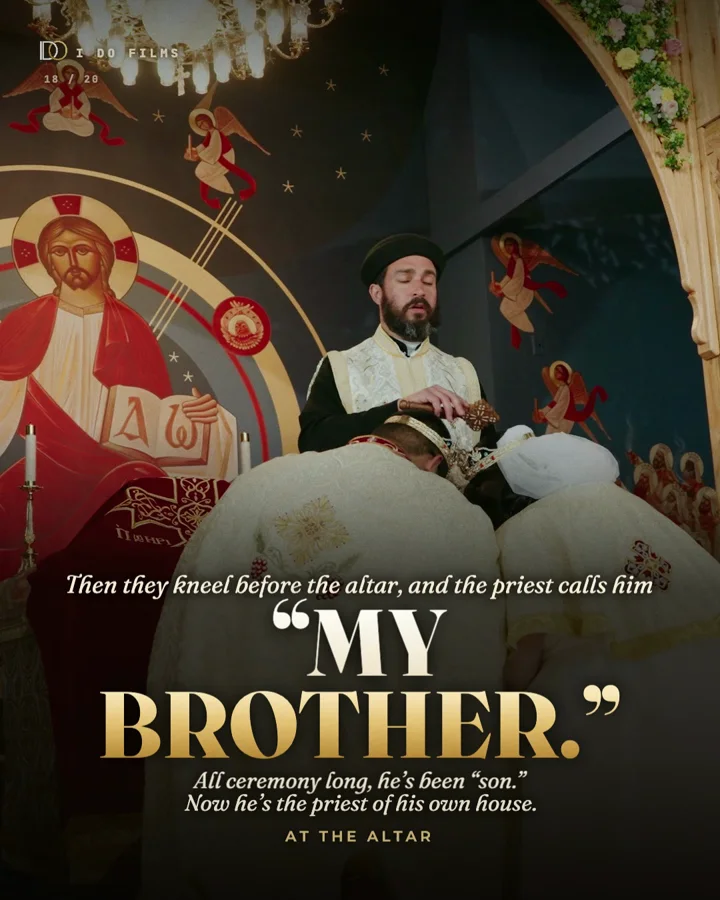
The altar curtain opens and you kneel for the blessing. We give the prayer and your response room to breathe.
11. Leaving church together
The final prayers lead into the procession out. Then come your family’s greetings and celebration, which are separate from the rite itself.
Hymns, or music under them
In the highlight film, some couples want music under the hymns and some want only the hymns. One groom told me the piano under the hymns in another film wasn’t adding anything, and he just wanted to listen to the hymn. We can have the hymns lead the whole thing. Tell us which you want on the planning call, along with any hymn that means something to your family.
The full ceremony edit
A highlight film tells the story of the day. The full ceremony edit keeps the whole rite, every prayer and every hymn, with clean audio. It’s included when I film your wedding myself. For one wedding with the Divine Liturgy, the full ceremony edit ran two hours and forty-three minutes.
Before the day
- Send your church’s details early: the start time, the priest’s contact, and whoever runs the audio.
- Ask your priest where the camera can stand, especially near the altar during the crowning.
- Decide on the hymns in your highlight film, with music under them or on their own.
- Plan the time after the rite: family greetings and photos at the church often take longer than timelines allow.
Our Coptic wedding films page has films from Coptic weddings we’ve filmed, and the glossary explains each term. For the rest of the day, see the Nashville wedding videography guide, and for our Nashville wedding videography as a whole, the service page.
Save this, and send it to your parents too.
Bebo